


Case Studies



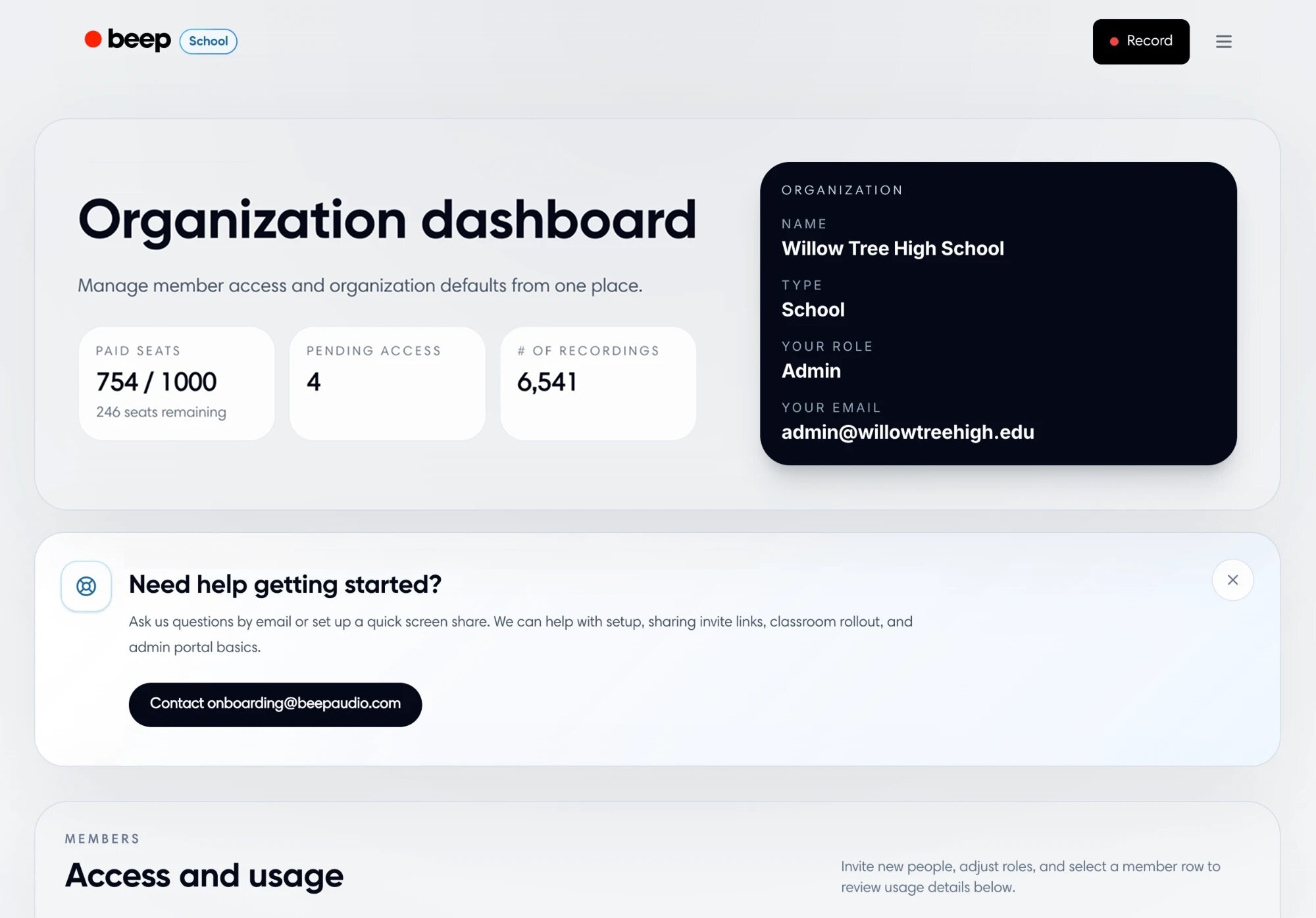
Selected work
Some recent projects can’t be listed due to NDAs.
About
A little more about meI’m happiest and most "in flow," when I’m actively designing or creating.
I’ve always been curious about human behavior and how our minds work (even had an abbreviated stint in grad school to study it). Product design is a natural extension of that.
That said, I’m always mindful that good design has to work for the business behind it.
How do you approach product design?
I spend a lot of time thinking about what could go wrong.
A lot of product design, for me, is a back-and-forth between anticipation and reconciliation.
Anticipation in that I try to imagine different people, different contexts, moments of confusion, desires, edge cases, and all the happy and unhappy paths between them.
Reconciliation in that I watch what people actually do. I talk to them. I look at the numbers. I read between the lines. And, after the fairly regular ego gut punches, I try to reconcile what I imagined with what is actually happening.
Then I do it again. And again.
Beyond that, the tools and starting point change with the problem. Sometimes I’ll start by writing requirements, thoughts, or prompts. Other times I’ll jump straight into Figma, Paper.design, Claude Design, or code. I find things get much easier once I’ve started in a material way and have something concrete to react to, criticize, and evolve.
I don’t think there’s one correct way to design. Processes can be useful, but the work should determine the method, not the other way around.
What are you particularly good at?
When it comes to design, I like to think I can wear many hats, but usability and user experience come especially naturally to me. It doesn’t feel like work to pick apart a flow, spot where someone might hesitate, or think through ways to make an interaction faster or more intuitive.
I also like problems that require zooming in and out. I can spend a long time thinking about how a product fits together, how different parts relate, and what the system needs to support, then happily disappear into the details of a single interaction.
More generally, I think I’m good at distilling messy problems into something concrete enough to design, build, test, and improve.
Do you really critique airport bathroom designs?
Not only airport bathrooms. Check-in experiences, escalator signage, infotainment systems, app onboarding flows, Apple Stores, and more. I have “designer’s disease.”
I can’t interact with a website, app, menu, appliance, building, or just about anything designed by another human without wondering why someone did that and why they couldn’t “just” do this instead. Bad design frustrates me more than it reasonably should.
For fun, I sometimes give (solicited) design and logo critiques to strangers on Reddit. Many would (rightly) say I should get better hobbies, but I genuinely enjoy the challenge of looking at something unfamiliar and asking how it could be better.
My slightly cringe pastime also has a practical benefit: it can get me out of unrelated creative or design roadblocks. Some of my better ideas about one problem arrive while I’m thinking about a completely different one.
How has AI changed the way you design?
I’ve never felt more empowered as a designer, or more overwhelmed by how quickly things are changing.
As a compulsive iterator, the ability to explore more ideas more quickly is an absolute game changer. For product work, I increasingly skip the static mockup and go directly to designing with code. If a picture is worth a thousand words, a working prototype is worth considerably more.
AI is remarkably good at filling in the blanks. That makes knowing which blanks to leave and which ones to specify increasingly important.
My eye still matters. My taste still matters. But so does intentionality. AI can produce something that looks perfectly plausible at first glance while being subtly wrong for the problem, person, or context. As polished output gets easier to generate, understanding why each decision belongs becomes more important, not less.
That also means being able to translate what I see in my head into language precise enough for a machine to help build it, then recognizing when what comes back isn’t quite right. That’s part of why I feel strongly that AI output should be understood, questioned, and digested before it’s accepted or sent to anyone else.
I think code will increasingly become a common source of design truth. I’m especially interested in tools that let me manipulate a design visually (like Paper.design), edit the underlying code directly, or describe a change to an LLM, while everything ultimately modifies the same thing.
More broadly, I find myself thinking more about the workflows and tooling behind the work. LLMs have gotten me increasingly interested in customizing open-source tools and building workflows around the way I want to work. When something doesn’t work the way I want it to, I’m now at least somewhat empowered to change it. As more manual work becomes automatable, I think designing how we explore ideas and evaluate what comes back will become an increasingly important part of the job.
How technical are you?
As much as I’d like to, I wouldn’t call myself a software engineer (not going to debase my developer friends like that ;)). But I’m comfortable enough with code to prototype ideas, modify implementations, understand technical constraints, and talk shop with engineers.
Long before LLM coding, I enjoyed tweaking code, building small projects, and working closely with engineers. AI has simply expanded the range of things I can make myself.
I especially like pressure-testing ideas with engineers. Their logical reasoning can be incredibly useful for honing ideas.
I’m also skilled at the very demanding role of sitting there while an engineer talks through a problem until they solve it themselves. I’m more than happy to take at least partial credit for it. ;)
What’s it like working with you?
You should probably take whatever I (or anyone) says about working with themselves with a grain of salt.
I care deeply about my work and I’m a very hard worker, but I try not to take myself too seriously. I like to think I change my mind fairly easily when there’s good evidence or a good argument, and I make a point of sharing credit and thanking people.
I’m better at marinating on difficult problems than producing brilliant answers on my feet. Give me something interesting to think about and there’s a good chance I’ll still be thinking about it later that night.
At this point in my career, who I work with matters enormously to me. There’s very little I enjoy more than working with smart, talented, kind people who care deeply about what they make.
The best work I’ve done has come from some combination of curiosity, disagreement, experimentation, mutual respect, and people who care enough to keep asking whether something could be better.